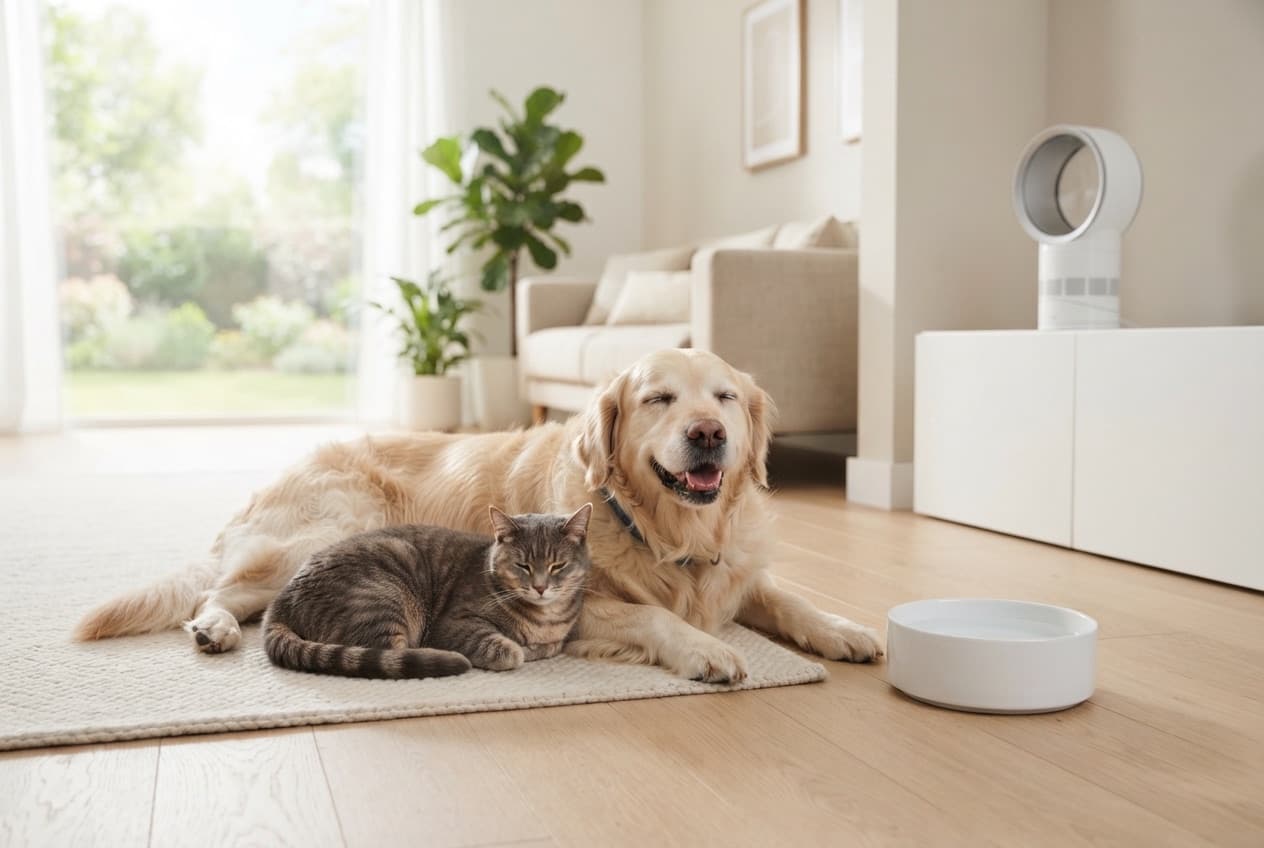


For most of us, the hardest part of sharing our lives with a dog or cat is knowing, from the very first day, roughly how the story ends. Our pets simply don't get as many years as we do. But for the first time, that timeline is starting to look less fixed than we thought. A handful of companies and research teams are no longer just treating the diseases of old age one at a time. They're trying to slow down aging itself, or to fix the single problem that shortens the most lives. Here's a look at the most promising work happening right now, what it could mean for your pet, and what's realistic to expect.
Aging as something you can actually treat
The big idea behind this new wave of research is deceptively simple. Conditions like arthritis, cancer, and cognitive decline look like separate problems, but they often share a common root: the gradual breakdown of the body's systems that we call aging. As Dr. Brennen McKenzie, director of veterinary medicine at the dog-longevity company Loyal, puts it, "Arthritis and cancer and cognitive dysfunction are all different things, but really, aging and metabolic health is one aspect of that that drives all these different things."1
The logic follows naturally: instead of playing defense against each disease as it appears, why not target the underlying driver and try to prevent several problems at once? "If we can pick off the underlying driver for all of these things, we can have a much greater impact on health and welfare and wellbeing than just working on each individual disease as it pops up," McKenzie told Fortune.1 It's a shift from reactive medicine to preventive medicine, and it's the principle uniting most of the longevity work now underway, even in humans.
A daily pill for senior dogs
The company furthest along this path is Loyal, a San Francisco clinical-stage veterinary medicine company whose stated mission is to give dogs longer, healthier lives.2 Its lead drug, LOY-002, is a once-daily pill designed for dogs aged 10 and older weighing at least 14 pounds (about 6.4 kg), and it targets what the company considers a core driver of age-related disease: metabolic dysfunction.2
Metabolic health, in Loyal's framing, is about how well the body regulates blood sugar and insulin, stores and uses fat, and balances key hormones.3 As dogs age, this regulation tends to break down. Cells become less responsive to insulin (the hormone that lets them take in sugar for fuel), so the body pumps out more and more of it; fat tissue stops responding properly to hormonal signals and leaks fatty acids into the bloodstream; and fat gets redistributed toward the unhealthy "visceral" kind packed around internal organs. These processes feed one another in what Loyal calls a "vicious cycle" that progressively worsens with age and raises the risk of cancer, cognitive decline, muscle wasting, and joint disease.3 LOY-002 is designed to interrupt that cycle and preserve metabolic health for longer.3 It's the company's lead candidate of three; the other two programs work by blocking insulin-like growth factor-1, a hormone tied to growth and aging.4
The drug's underlying rationale rests on a striking piece of older science. In a landmark Purina study following Labrador retrievers over their entire lives, dogs fed 25% less food than their littermates lived, on average, about 1.8 years longer and developed age-related diseases like arthritis and cancer noticeably later.56 The catch is that deliberately underfeeding a dog for life is impractical and, done wrong, risks malnutrition. LOY-002 is what scientists call a "caloric restriction mimetic": it aims to trigger some of the same beneficial biology as eating less, without actually restricting calories or causing weight loss.13 "Part of the genius of the idea of LOY-002 is that it achieves some of the same goals biologically as caloric restriction without the hardship and the risks of doing that," McKenzie said.1
How close is it, really?
This is where it pays to separate excitement from evidence. To bring LOY-002 to market, Loyal is pursuing the FDA's Expanded Conditional Approval pathway (a route designed to let promising treatments for unmet needs reach patients sooner), while longer studies continue in the background.7 Approval requires clearing three major technical sections: a reasonable expectation of effectiveness, target animal safety, and manufacturing quality. As of early 2026, the FDA had accepted the first two, effectiveness in February 2025 and safety in January 2026, leaving only the manufacturing component, which Loyal says it aims to submit later in the year.78 The safety package drew on data from more than 400 dogs given the drug, with no clinically significant adverse events at up to five times the intended dose.7 If LOY-002 is approved, it would be the first drug ever cleared specifically for extending lifespan in any species.8
Running alongside this is the STAY study, which Loyal describes as the largest clinical trial ever conducted in veterinary medicine: a randomized, double-blinded, placebo-controlled trial of roughly 1,300 dogs across about 70 to 72 clinics nationwide.12 The trial is now more than two years into a minimum four-year run, and demand to participate was extraordinary: more than 12,000 people emailed the company hoping to enroll their dogs.1
As for the headline question of how many extra years, McKenzie is deliberately cautious, and it's worth absorbing his caution rather than the hype. "Numbers are always tricky, because we tend to fixate on them and think they're more reliable than they are," he said. So far the study has detected "at least a one-year difference" between treated and placebo groups, but he stressed, "I don't think there's any way we can say you're going to get a certain number of years or months more with your dog."1 He's also explicit that this isn't a miracle: "It's not a hack. It's not a quick trick. It's just taking a basic, foundational understanding of how aging and biology works, and doing better preventive medicine."1
The work has attracted serious financial backing, too. In February 2026, Loyal raised a $100 million Series C round, bringing total investment in the company to over $250 million since it was founded in late 2019.9
A different route: repurposing an existing drug
Loyal isn't the only group betting that aging in dogs can be slowed. A second national trial is testing a very different and much older tool: rapamycin, a compound first isolated from a soil bacterium on Easter Island (known by its native name Rapa Nui, hence the drug's name) around 1970.4 Already approved in human medicine as sirolimus, it is used today to prevent organ-transplant rejection, treat certain cancers, and coat cardiovascular stents.4 Its longevity story began in 2009, when a landmark study in Nature showed that feeding the drug to older mice extended their lifespan, by about 14% in females and 9% in males, with later work confirming similar effects across laboratory animals.410
The drug works by inhibiting a cellular pathway called mTOR, which governs how cells balance growth against maintenance and repair.11 At the high doses given to transplant patients it suppresses the immune system, but at the low, intermittent doses studied for aging it appears to shift cells toward a more efficient, repair-focused state.114 Dogs make an unusually good test case: they age roughly seven to ten times faster than we do, share our homes and environment, and develop many of the same age-related diseases.114
That's the premise of the Test of Rapamycin in Aging Dogs (TRIAD), run through the Dog Aging Project, a nationwide study that has already enrolled more than 50,000 pet dogs.4 TRIAD is a randomized, placebo-controlled trial giving eligible dogs (generally neutered, aged 7 and older, and weighing roughly 44 to 120 pounds, or 20 to 54 kg) weekly rapamycin or a placebo for a year, with follow-up visits over three years tracking heart health, mobility, cognition, and lifespan.4 Researchers describe it as the first rigorous test of an anti-aging drug, measured by lifespan and healthspan, ever conducted outside the laboratory in any species. After a 2024 funding lapse nearly ended the project, a $7 million grant from the U.S. National Institute on Aging revived it, and the study is slated to run through 2029.1211
The scientists leading it are refreshingly frank about the uncertainty. "We're not doing the study because we think rapamycin will make dogs live longer, we're doing it to find out if it works or not," said Dr. Kate Creevy of Texas A&M University, a Dog Aging Project founder. "Being part of the study is a gift to future generations of dogs, but not necessarily a gift to your dog." So far, she noted, no unexpected side effects have been observed.4 Her candor points to a real ethical wrinkle, too: because pets can't consent, giving experimental drugs to otherwise healthy animals is something researchers weigh carefully, and the reason veterinarians discourage owners from seeking out rapamycin off-label before the evidence is in.4
For cats: tackling the disease that ends too many lives
Dogs aren't the only ones benefiting from this shift in thinking. For cats, the most exciting recent news targets a specific, familiar enemy: chronic kidney disease (CKD). It's one of the leading causes of death in older cats, and cats suffer from it at strikingly higher rates than most other mammals. The question researchers have long asked is why, and the answer may finally point toward a treatment.
The most advanced effort comes from Japan, where the Tokyo-based Institute for AIM Medicine, led by immunologist Dr. Toru Miyazaki, filed for regulatory approval of a feline kidney treatment with the country's agriculture ministry in April 2026.13 The science traces back to a discovery Miyazaki made about a blood protein called AIM (apoptosis inhibitor of macrophage). In healthy animals, AIM helps clear cellular waste and debris that would otherwise clog the kidneys. In cats, however, AIM stays tightly bound to antibodies in the blood and doesn't detach to do its job, so waste accumulates, inflammation follows, and the kidneys gradually fail.14 The treatment is designed to supply functional AIM activity and help the kidneys clear that debris.
The early trial results are genuinely eye-catching. In a study published in The Veterinary Journal in February 2026, researchers tracked 11 cats that received the treatment and 15 that did not over the course of a year. The cumulative survival rate was between 80% and 83% in the treated group, compared with just 20% in the untreated group.1315 Those are small numbers and a short follow-up, but the gap is large enough to justify the attention. If approval goes through, the treatment could become available to cat owners as early as spring 2027.13
Meanwhile, researchers at the University of Nottingham's vet school are chasing the same puzzle from a different angle. In a study published in Frontiers in Veterinary Science, they found unusual fat accumulations ("novel lipids," including some with chemical bonds rarely seen in other mammals) building up in the kidney cells of domestic cats, even from a young age, in a pattern not seen in dogs.1617 These deposits may be both an early warning sign of kidney stress and a clue to why cats are so prone to CKD in the first place. "Why these types of unusual fats accumulate in domestic cat kidneys, even from an early age, may offer an important clue as to why domestic cats are particularly prone to chronic kidney disease," said project co-lead Rebecca Brociek.16 Her colleague David Gardner suggested the long-term payoff could be practical: "we believe we could develop a supplement or modified diet to help prevent these unusual lipid structures from accumulating."16
Major industry players are circling the same target. Animal-health company Zoetis has said it is developing monoclonal antibody treatments aimed at the progression of kidney disease, intended to be administered by ordinary general-practice vets. As the company's global chief medical officer Richard Goldstein put it, existing dietary and therapeutic options have only worked "along the margins," and the real prize is interrupting the relentless progression of the disease once it begins.16 It's worth noting that cats have unusual drug sensitivities compared with dogs and people, which is part of why feline drug development has lagged and why these tailored, cat-specific approaches matter.4
Cats are already living longer
It's worth stepping back to note that even before these treatments arrive, cats are quietly living longer than they used to. Recent figures put the average lifespan of domestic cats at around 16 years in Japan and roughly 15 to 16 years in the United States, with strictly indoor cats faring best and averaging over 17 years, versus about 13 for cats with outdoor access.18 Spaying and neutering helps measurably: a 2024 VetCompass study found neutered cats lived about 1.07 years longer than intact cats on average.19 The drivers behind the broader trend are familiar and within every owner's reach: keeping cats indoors, better nutrition and veterinary care, and earlier detection of problems through routine checkups.18
What this means for you and your pet
So where does all this leave a pet owner reading the headlines? Cautiously hopeful is the right setting. These are real, well-funded, scientifically grounded efforts, several of them already in front of regulators. But none is a finished, proven product on the shelf yet, the trial populations are still relatively small or still running, and even the scientists leading the work are careful not to promise specific numbers of extra years.
The most important takeaway is also the most practical: the same principles driving these breakthroughs are things you can act on today. Keeping your pet at a healthy weight, feeding well, encouraging movement, keeping cats indoors, staying current on veterinary visits, and screening for problems like kidney disease early all target the very processes these new treatments aim to address. The drugs on the horizon are exciting precisely because they extend, rather than replace, good everyday care. And if they live up to their early promise, the hardest part of loving a pet might, before long, come with a little more time attached.
Footnotes
-
Gioino, C. "Man's best friend may soon live a little longer thanks to a new pill promising to extend your pup's lifespan." Fortune, April 11, 2026. https://fortune.com/2026/04/11/dog-lifespan-longevity-loyal-drug-fda/ ↩ ↩2 ↩3 ↩4 ↩5 ↩6 ↩7 ↩8
-
Loyal (Loyal Animal Health, Inc.), company website and product overview. https://loyal.com/ ↩ ↩2 ↩3
-
Austriaco, J. "The science behind lifespan extension: Metabolic dysfunction." Loyal Blog, July 16, 2024. https://loyal.com/posts/metabolic-dysfunction ↩ ↩2 ↩3 ↩4
-
Sykes, J. "Ask a Vet: Is there a pill that can help my dog live longer?" The Washington Post, May 11, 2026. https://www.washingtonpost.com/home/2026/05/11/advice-longevity-pills-dogs-rapamycin/ ↩ ↩2 ↩3 ↩4 ↩5 ↩6 ↩7 ↩8 ↩9 ↩10 ↩11
-
Kealy, R.D., Lawler, D.F., Ballam, J.M., et al. "Effects of diet restriction on life span and age-related changes in dogs." Journal of the American Veterinary Medical Association, 2002;220(9):1315-1320. https://pubmed.ncbi.nlm.nih.gov/11991408/ ↩
-
Lawler, D.F., Larson, B.T., Ballam, J.M., et al. "Diet restriction and ageing in the dog: major observations over two decades." British Journal of Nutrition, 2008;99(4):793-805. https://doi.org/10.1017/S0007114507871686 ↩
-
McKenzie, B. "One step closer to a dog longevity drug: What LOY-002's safety milestone means to a practicing vet." Loyal Blog, January 13, 2026. https://loyal.com/posts/loy-002-tas ↩ ↩2 ↩3
-
"Loyal Receives FDA Acceptance of Reasonable Expectation of Effectiveness for Senior Dog Lifespan Extension." Business Wire, February 26, 2025. https://www.businesswire.com/news/home/20250226676005/en/Loyal-Receives-FDA-Acceptance-of-Reasonable-Expectation-of-Effectiveness-for-Senior-Dog-Lifespan-Extension ↩ ↩2
-
"Loyal Raises $100M Series C, Led by age1, to Advance the First Canine Longevity Drug." Business Wire, February 11, 2026. https://www.businesswire.com/news/home/20260211301175/en/Loyal-Raises-%24100M-Series-C-Led-by-age1-to-Advance-the-First-Canine-Longevity-Drug ↩
-
Harrison, D.E., Strong, R., Sharp, Z.D., et al. "Rapamycin fed late in life extends lifespan in genetically heterogeneous mice." Nature, 2009;460(7253):392-395. https://pmc.ncbi.nlm.nih.gov/articles/PMC2786175/ ↩
-
Ryave, J., Coleman, A.E. "A review of rapamycin as a potential intervention to promote longevity and extend healthspan in companion dogs." Journal of Veterinary Science, 2025 Oct;26(S1):S181-S198. https://vetsci.org/DOIx.php?id=10.4142/jvs.25219 ↩ ↩2 ↩3 ↩4
-
Won, C. "$7M grant rescues dog study investigating rapamycin for canine aging." AVMA News, February 26, 2025. https://www.avma.org/news/7m-grant-rescues-dog-study-investigating-rapamycin-canine-aging ↩
-
Agence France-Presse. "Japan startup seeks approval of cat kidney disease treatment." France 24 / phys.org, April 27, 2026. https://www.france24.com/en/live-news/20260427-japan-startup-seeks-approval-of-cat-kidney-disease-treatment ↩ ↩2 ↩3
-
Greycoat Research. "AIM Science: Why Cats Are Vulnerable to Kidney Issues" (summary of Dr. Toru Miyazaki's research on the AIM protein). https://greycoatresearch.com/aim-science ↩
-
Miyazaki, T., et al. "A clinical impact of apoptosis inhibitor of macrophage on feline chronic kidney disease." The Veterinary Journal, February 2026. https://pubmed.ncbi.nlm.nih.gov/41485732/ ↩
-
Webb, A. "Research raises hopes of feline chronic kidney disease care advance." Vet Times, March 27, 2026. https://www.vettimes.com/news/vets/small-animal-vets/research-raises-hopes-of-feline-chronic-kidney-disease-care-advance ↩ ↩2 ↩3 ↩4
-
Brociek, R., Gardner, D., et al. Study on intracytoplasmic lipid droplets in feline renal proximal tubule epithelial cells. Frontiers in Veterinary Science (University of Nottingham), 2026. ↩
-
"Cat Longevity Statistics 2026" (average feline lifespans, indoor vs. outdoor). Carelogy. https://carelogy-japan.com/en/columns/cat-longevity-statistics-2026 ↩ ↩2
-
VetCompass programme (Royal Veterinary College), 2024 analysis of feline lifespan and neuter status. See also: "The truth about how long your cat will really live." The Independent. https://www.independent.co.uk/life-style/cat-average-lifespan-health-inside-b2986339.html ↩